Inside My Passementerie Masterclass at the Royal School of Needlework
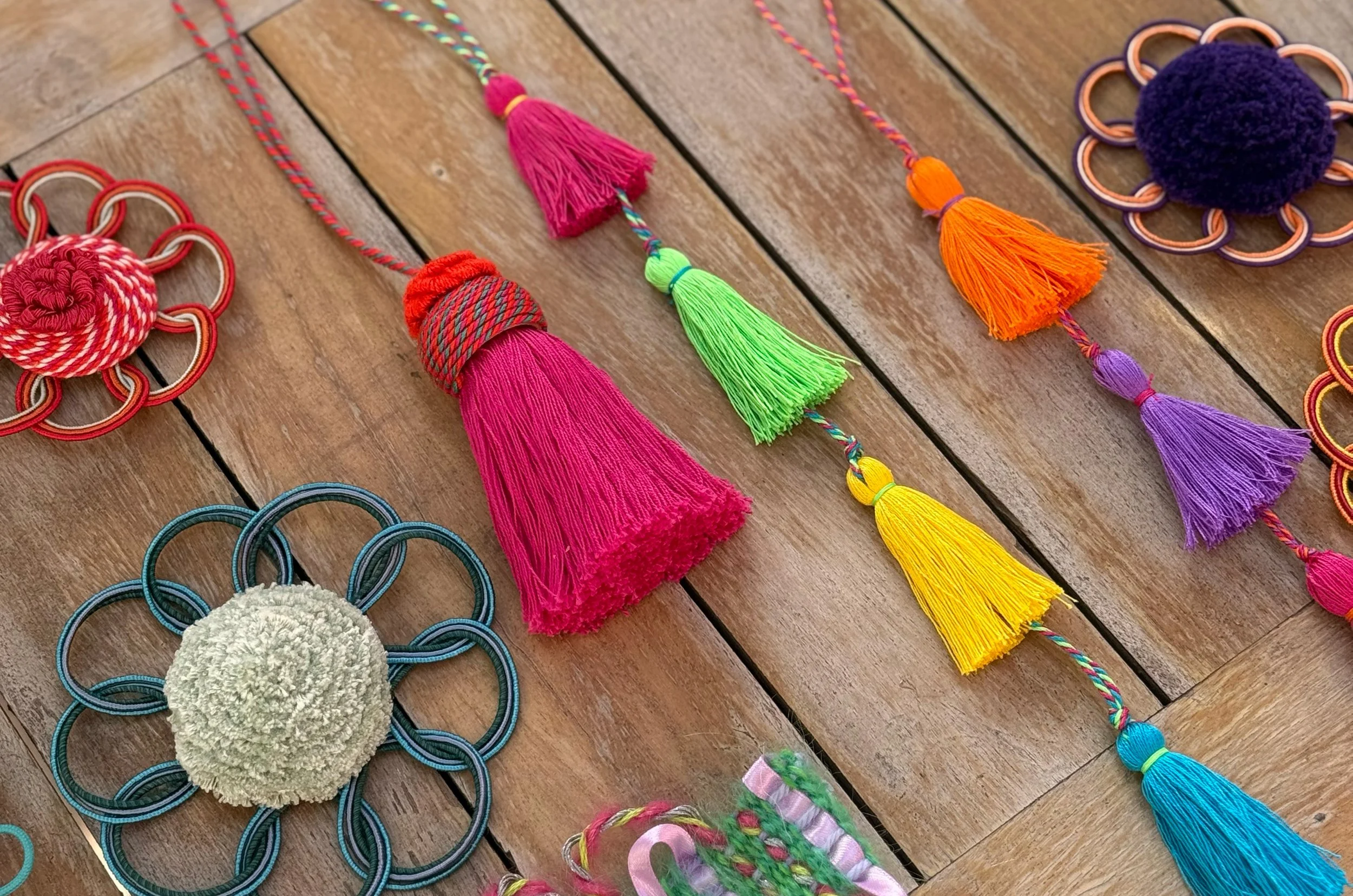
Every time I teach my five-day Passementerie Masterclass, I'm reminded of how differently the same set of techniques can turn out in different hands. Everyone works from the same starting point - the same tassel moulds, the same gimp cord, the same weaving structures. Yet by the end of the week, no two collections of finished passementerie look alike because of the amazing variety of colours my students select.
Over the two years I've been teaching this course, first at Hand & Lock and now at the Royal School of Needlework, that's become one of my favourite parts of the week. Watching students move from following instructions to making personal decisions is so exciting. Somewhere around day two or three, once the technical foundations are in hand, the conversation shifts. It stops being "how do I do this" and starts being "what if I did this in orange instead" or "how could I make a larger tassel for my curtains?”
That's really the heart of the course for me. The technical side is essential, and I spend real time on it - learning to snail a tassel mould cleanly, to weave a stable braid, to construct a rosette in the traditional manner. But passementerie has always been a design language as much as a technical one, and I want students to leave not just able to make the forms, but able to make choices within them. So alongside the hands-on technique, we spend time thinking about colour. We look at how a pairing can feel traditional or completely contemporary depending on the combination, how contrast changes the read of a tassel, and how a single unexpected colourway can turn a classical form into something entirely personal.
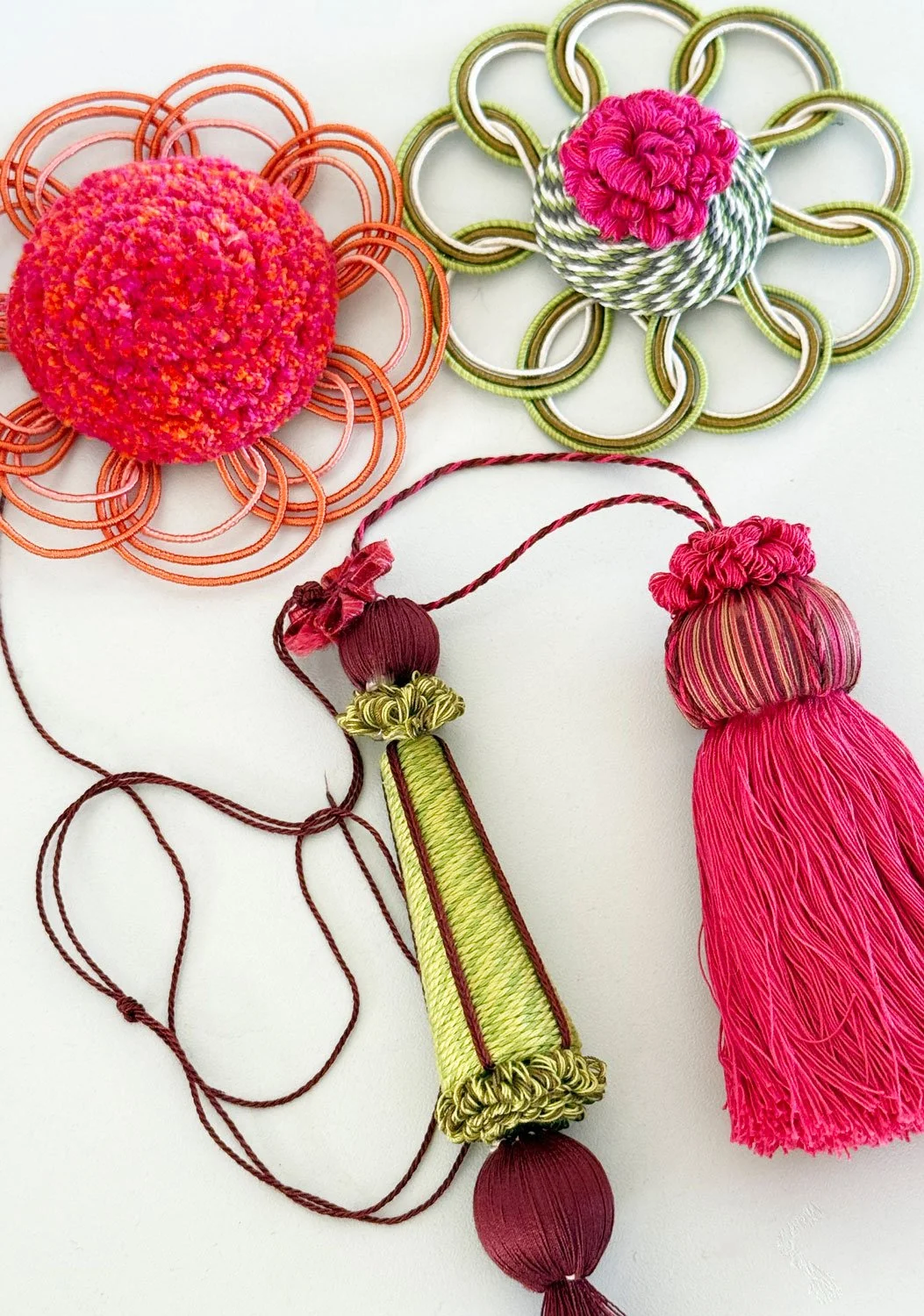
Rachel’s fabulous collection of Passementerie is starting to come together. I love her use of lime green contrasted with maroon and hot pink. Delicious!
By the end of the five days, every student has made a complete set of passementerie in their own choice of colours - a covered mould key tassel, a Jasmin decoration, two handmade rosettes created with traditional gimp over covered moulds, and two hand-woven braids. The techniques are consistent across the group. The colourways almost never are! I've had soft, tonal sets that look like they belong in an eighteenth-century drawing room sitting right next to bold, saturated combinations that feel striking and modern. They were all made in the same room, in the same week, from the same instructions.
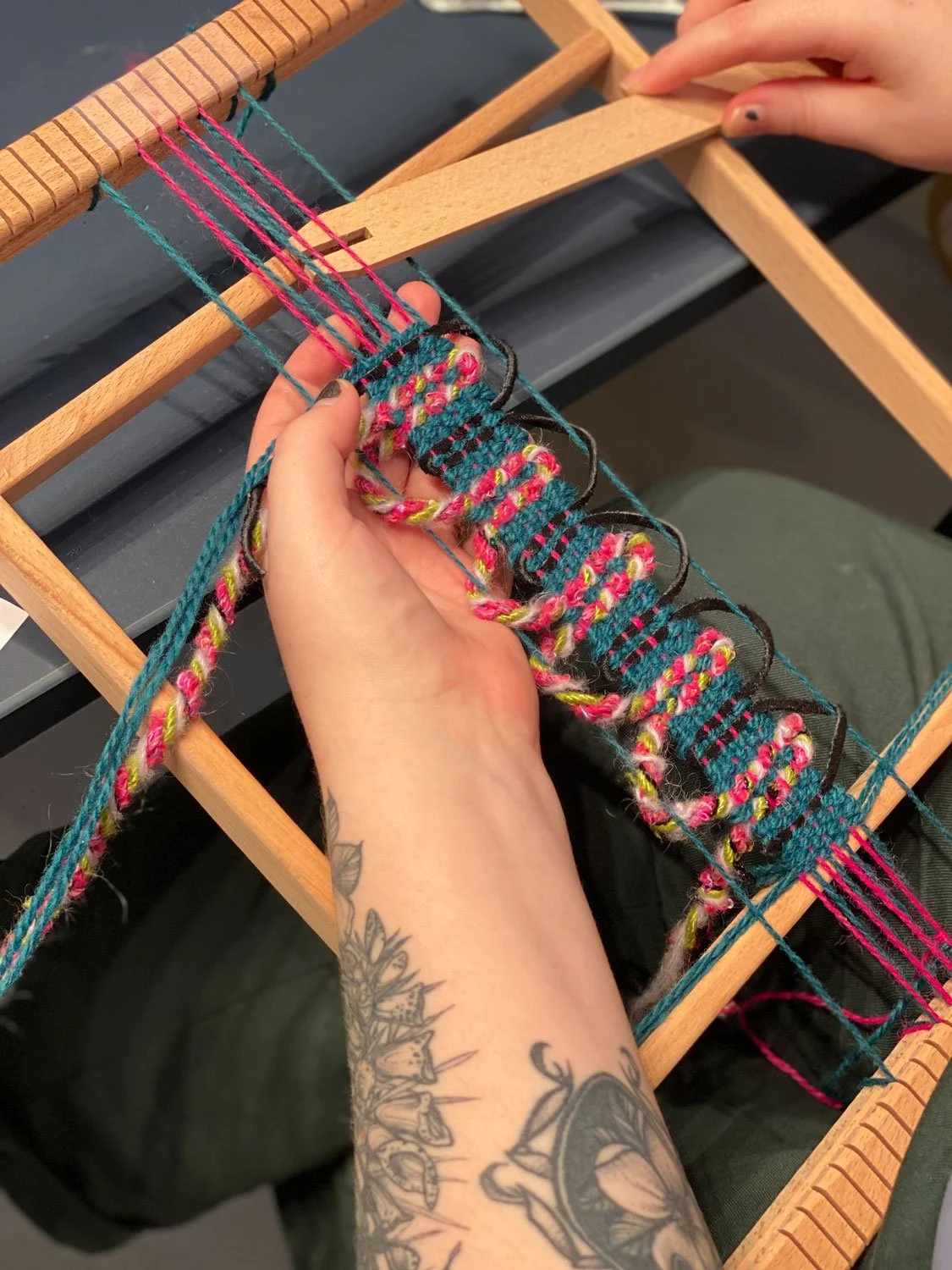
A student hand weaving a traditional passementerie design ‘Crete’ on a frame loom.
“Getting to pick from from many colours and materials was really special… I liked that we made several different things by the end of the week, and the variety was just right.”
“Elizabeth was dealing with a group with quite a range of experience and she handled this really well, making sure that everyone received the help and guidance they needed. She was very patient and attentive, and I never felt that asking for something to be explained again was a problem.”
“I am a teacher myself and I definitely listened to how she gave instructions without frustration and plan to apply some of her teaching style to mine back at home… There was so much ‘making’ time that the hours flew past so I was just so happy the whole week.”
I'll be teaching the masterclass again at the Royal School of Needlework in 2027. Full class details and booking information go live on 30th September. I'll share the link here and in the newsletter as soon as it's up.
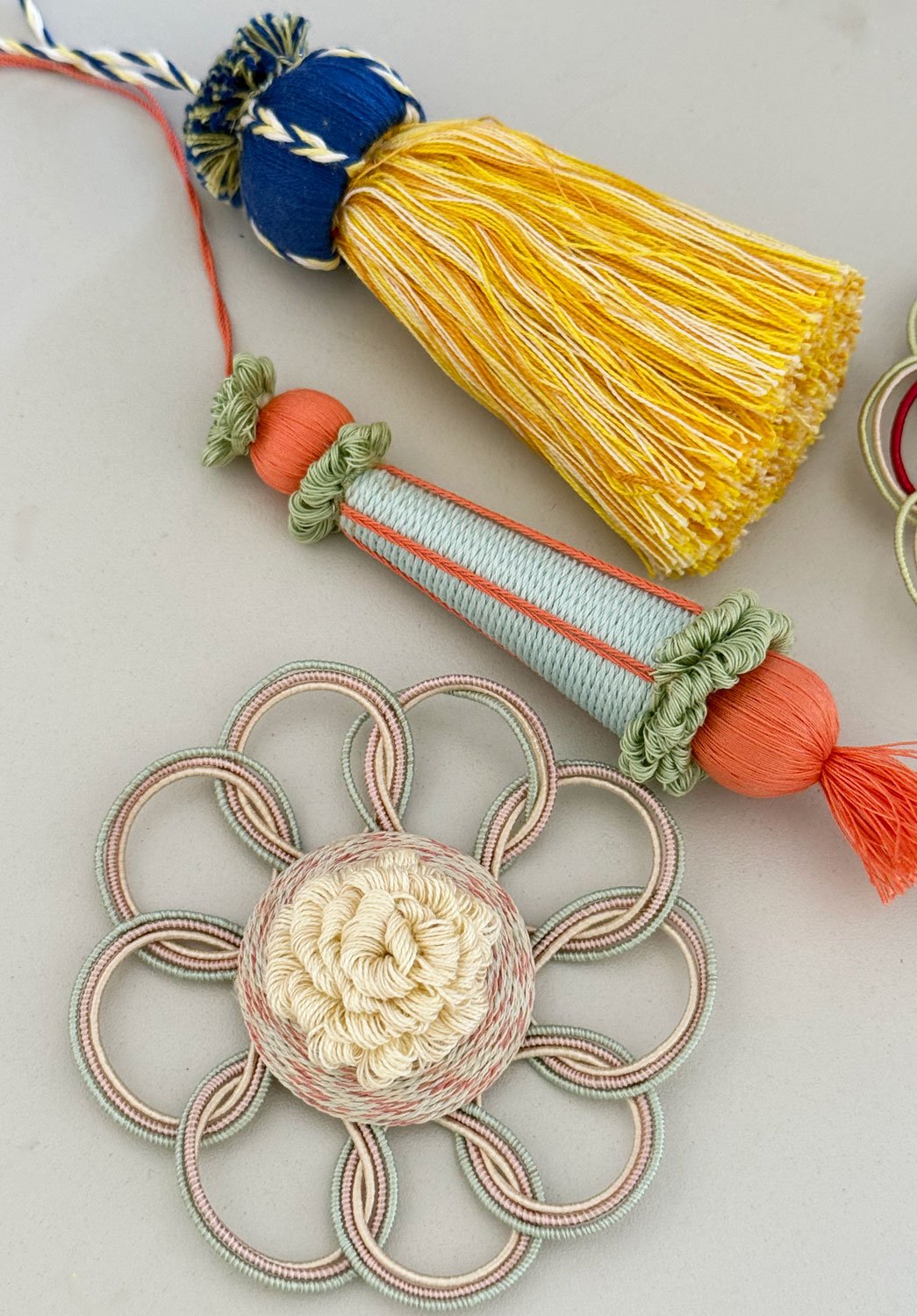
Colour is where students make the techniques their own. Here, cobalt meets sunshine yellow, and coral lifts a cool duck-egg blue, alongside a quietly tonal rosette in sage, blush and cream.
A few practical questions
What is passementerie?
Passementerie is the art of decorative trimmings and braids, historically used in interiors, upholstery and dress. It includes tassels, rosettes, cords and woven braids. It's both a highly technical and a creative craft, currently on the Red List of Endangered Crafts in the UK.
Who teaches the masterclass?
I do: Elizabeth Ashdown, an award-winning designer creating traditional and contemporary passementerie from my UK studio. I'm one of only three hand passementerie makers still working in the UK, and one of a handful worldwide. I have 11 years' experience teaching adults at university level. I hold an MA in Textiles from the Royal College of Art, am a Queen Elizabeth Scholarship Trust Scholar and a Heritage Crafts Endangered Crafts Fund award winner, have published with Schiffer Craft, and have a licensed collaboration with Samuel & Sons. I've taught this masterclass for two years, at Hand & Lock and the Royal School of Needlework.
Where and when is the course taught?
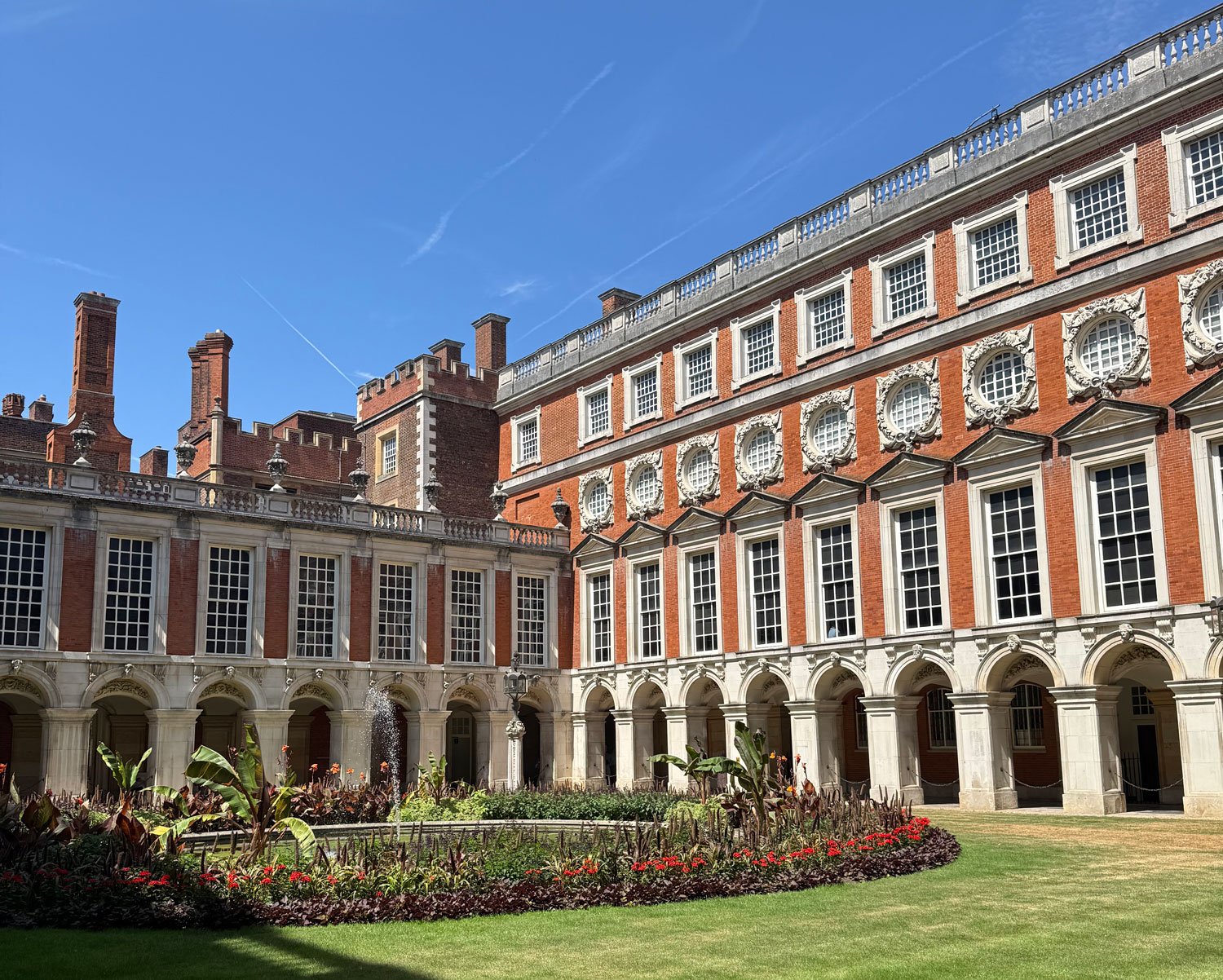
The masterclass has run at Hand & Lock and at the Royal School of Needlework. It will be taught again at the RSN in 2027 on the 14th - 18th July 2027 at Hampton Court Palace.
What will I make?
Over five days, you'll make a covered mould key tassel, a Jasmin decoration, two handmade rosettes using traditional gimp over covered moulds, and two hand-woven braids.
Do I need previous experience?
No! Most students on the masterclass have never made passementerie before, and I make sure everyone gets the help they need, whatever their level of experience.
How do I book?
Please click here for full class and booking information.